
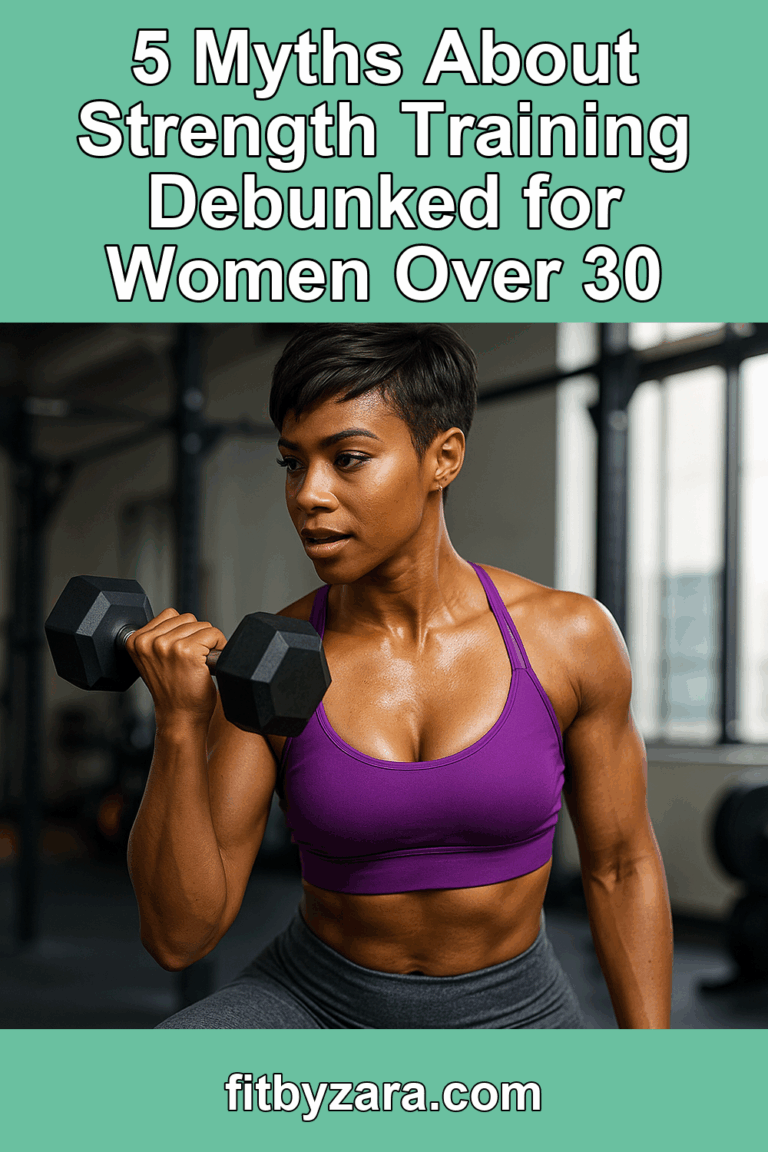
Introduction
As women age, strength training often gets misunderstood or overlooked due to common myths. If you’re over 30, you may have heard that lifting weights will make you bulky or that it’s too late to start. This post aims to debunk five prevalent myths about strength training, empowering you to embrace a healthier lifestyle.
Myth 1: Strength Training Will Make Me Bulky
One of the biggest misconceptions is that women will develop large muscles similar to male bodybuilders. This myth is largely due to the difference in testosterone levels between men and women.
- Women have about 10% of the testosterone levels compared to men.
- Strength training leads to a toned and defined physique, not bulk.
- Focus on lower weights and higher reps for a lean look.
Checklist for Avoiding Bulking
| Tip | Details |
|---|---|
| Focus on weight selection | Choose weights that are challenging but manageable for 8-12 reps. |
| Combine with cardio | Incorporate cardio to help maintain a lean physique. |
| Pay attention to nutrition | Ensure your diet supports your goals, emphasizing protein. |
Myth 2: Strength Training is Too Intense for Me
3-Day Energy & Metabolism Reset
Grab the 3-Day Energy & Metabolism Reset — a quick-start guide to feel lighter, more energized, and back in control.
Where should we send your free guide?
Many believe that strength training is only for athletes or those who are already fit. In reality, it can be easily modified for all fitness levels.
- You can start with bodyweight exercises.
- Use resistance bands for low-impact strength training.
- Gradually increase weight as you grow stronger.
Beginner-Friendly Strength Training Plan
- Week 1-2: 15-20 minutes of bodyweight exercises 2-3 times a week.
- Week 3-4: Introduce light weights (2-5 lbs) for 20-30 minutes.
- Week 5 onward: Increase weight and time as you feel comfortable.
Myth 3: Strength Training is Only for Young People
It’s never too late to start strength training. Aging can actually make strength training more essential for maintaining muscle mass.
- Your muscle mass naturally declines with age.
- Strength training helps increase bone density.
- It improves overall functional strength and mobility.
Benefits of Strength Training for Older Women
| Benefit | Description |
|---|---|
| Increased bone density | Reduces the risk of osteoporosis. |
| Improved metabolism | Helps maintain a healthy weight. |
| Enhanced joint health | Strengthens muscles around joints, reducing injury risk. |
Myth 4: I Need to Spend Hours in the Gym
Another common belief is that significant time must be dedicated to strength training. Fortunately, effective workouts can be completed in less than an hour.
- Shorter, high-intensity workouts can yield great results.
- Focus on compound movements that work multiple muscle groups.
- 3-4 strength sessions per week can be sufficient.
Efficient 30-Minute Workout Routine
- Warm-up: 5 minutes of dynamic stretches.
- Squats: 3 sets of 10-15 reps.
- Push-ups: 3 sets of 8-12 reps.
- Plank: Hold for 30-60 seconds.
- Cool down: 5 minutes of stretching.
Myth 5: Cardio is All I Need for Weight Loss
While cardio is essential, strength training plays a vital role in sustainable weight loss and overall health.
- Burns calories during and after workouts (EPOC effect).
- Builds muscle, which increases resting metabolic rate.
- Improves body composition by reducing fat and increasing lean mass.
Balanced Fitness Checklist
| Activity | Frequency |
|---|---|
| Cardio | 3-5 times per week |
| Strength Training | 2-4 times per week |
| Flexibility Exercises | Daily |
Frequently Asked Questions
- What is the best way to start strength training?
- Begin with bodyweight exercises, then gradually introduce weights.
- How often should I strength train?
- 2-4 times a week is recommended for best results.
- Can I do strength training at home?
- Yes! Bodyweight exercises and resistance bands are perfect for home workouts.
- What if I have injuries or limitations?
- Consult a physician or a certified trainer to customize
Caffeine-free2-capsule routineHabit-first
HepatoBurn: Gentle Support for Steadier Days
When you’re stacking real habits—protein-forward meals, steps, and 7–9 hours of sleep—HepatoBurn is a simple add-on that supports the system behind energy, appetite, and metabolic rhythm.
Why Women 30+ Use It
- Pairs with an already-solid routine—no jitters, no crash.
- Easy to remember: 2 capsules with meals.
- Plays well with protein, walking, and strength training.
How to Use
- Timing: Breakfast & lunch are easy wins.
- Consistency: Use daily for a fair assessment.
- Stacks: Protein-first plates, post-meal walks, lights-down wind-down.
What It Isn’t
- Not a stimulant and not a magic fix.
- Best used alongside habits you’ll actually keep.
- Educational only—talk to your provider before new supplements.
Important: Educational only, not medical advice. Supplements don’t diagnose, treat, cure, or prevent diseases. Talk to your provider before changes to diet, exercise, or supplements.



















